All India Shipping Available

All India Shipping Available

Welcome to Future stiles, We are passionate about transforming spaces with our unique range of tiles that redefine the concept of style and functionality.

Tile in your bathroom is an important part of keeping your clean, hygienic and stylish. They protect the walls and floor whilst adding style to your home. However tiles can get dirty and dull over time as they are regularly exposed to water, soap, shampoo, hard water, dirt and humidity.
Soap scum can build up on the walls of your shower, hard water can cause white stains and the moisture can cause mould and mildew to grow between your tiles. If not cleaned regularly this can become a real problem and difficult to clean.
However there’s no need to spend lots of money or hire professionals to clean your bathroom tiles. The right techniques and products can be used to keep your bathroom tiles looking fresh, shiny and beautiful.
Within this detailed article we’ll run through how to clean your bathroom tiles, how to remove tough stains, how to clean grout, how to clean different tile finishes and stop any common issues when cleaning.
Tiles in your bathroom are regularly exposed to water and cleaning products. Even if they look clean over time they can build up soap scum, scale and dirt.
Cleaning your tiles regularly will help keep them looking nice.
There are a range of reasons why you should clean your bathroom tiles:
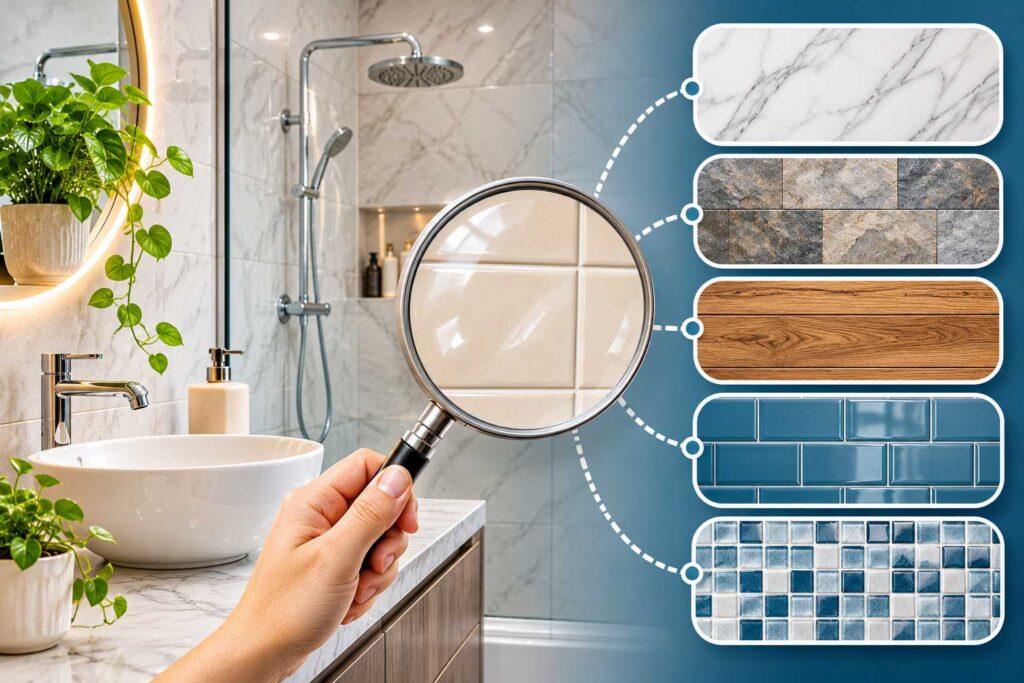
It’s important to know what kind of tiles you have before choosing a cleaning product. Different materials will need different products to keep them clean. A product that works on ceramic tiles may cause damage to natural stone or delicate surfaces.
Most Common Tile Types
Ceramic Tiles
Ceramic tiles are a very popular choice for bathroom walls and flooring. They come in a range of colours, patterns and finishes and are generally easy to keep clean. A gentle pH neutral cleaning product can be used with warm water.
Avoid using a scouring pad which could damage the design.
Porcelain Tiles
Porcelain tiles are a popular choice for modern bathrooms. They are a hard, dense material and can come in a range of finishes such as matte, glossy, textured and stone effect.
For general cleaning use an appropriate tile cleaner or gentle cleaning product. Textured porcelain floors may need a soft nylon brush to clean dirt from the grooves.
Glossy Tiles
Glossy tiles will give your bathroom a bright look however they can cause water spots, finger prints and soap scum to show. Use a soft microfibre cloth and non-abrasive cleaning product. Wipe down to avoid water spots.
Matte Tiles
Matte tiles can give your bathroom a subtle and modern look however may show dirt more. Use a gentle cleaning product and a soft brush or microfibre mop. Avoid using oily products.
Natural Stone Tiles
Marble, limestone, travertine and other natural stone tiles need to be treated carefully. Some natural stones can be sensitive to acidic products such as vinegar and lemon juice.
Only use a cleaning product specified for that type of stone. Avoid using normal bathroom descaling products. Avoid using acidic products and harsh chemicals unless specified by the manufacturers instructions.
Always check the manufacturers instructions for your tiles. Test any new products on a small area.
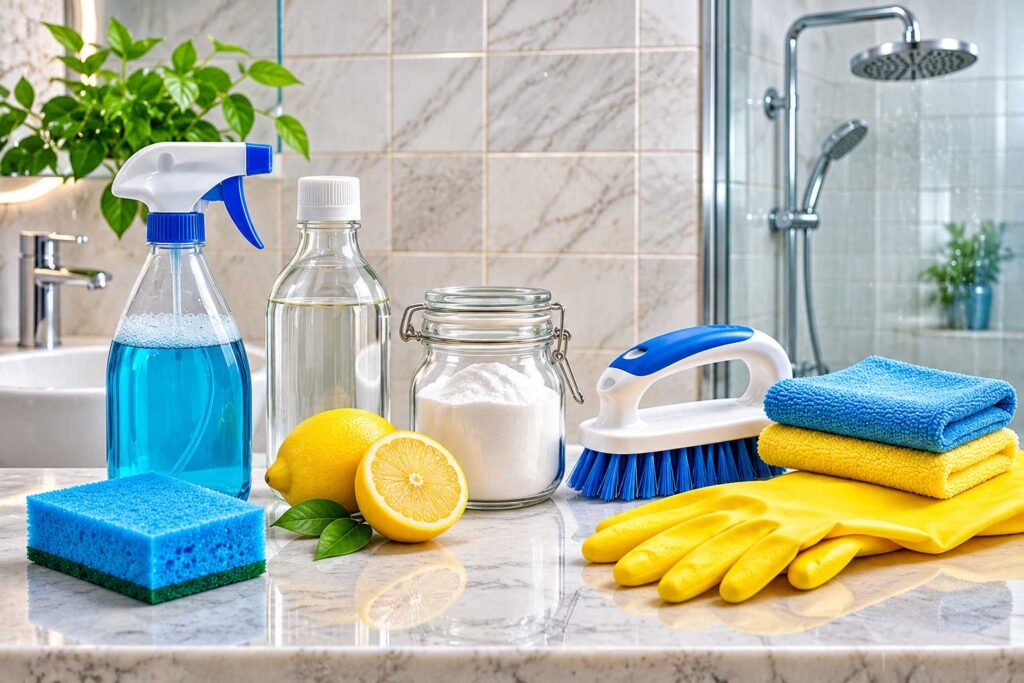
You won’t need lots of expensive cleaning products to keep your bathroom tiles clean. Simply a few cleaning tools and the right products.
Cleaning tools:
Cleaning products:
Try not to use multiple cleaning products. Always check the product label to see what dilution to use. Ensure it is suitable for your tiles, grout and bathroom fittings.
To ensure your tiles are properly cleaned, clean from top to bottom to avoid dirty water dripping onto tiles that have already been cleaned.
Step 1: Remove Bathroom Accessories and Loose Items
Move bathroom products away from the floor and corners of the shower. Remove any loose hair, dust or dirt.
Step 2: Sweep or Dust the Tiles
Before adding any water or cleaning products remove any loose dirt from your bathroom floor.
Use a dry mop, soft brush or vacuum. Be careful to clean corners, edges and behind the toilet.
This is important as any loose dust and tiny particles can spread onto your wet tiles.
Step 3: Prepare a Mild Cleaning Solution
For regular cleaning of suitable ceramic and porcelain tiles mix a little mild liquid detergent into warm water.
Don’t overdo it as it can cause a sticky film to form which will attract more dust and dirt.
If using a commercial tile cleaner please follow the manufacturers dilution instructions.
Step 4: Apply the Cleaning Solution
Soak a soft sponge or microfibre cloth in your solution and gently wipe your tiles.
Work in sections for your bathroom walls and start from the top and work down. For your floors start from the furthest end and work toward the exit.
Leave the product on your tiles for the amount of time stated on the label. Don’t let it dry.
Step 5: Scrub Stubborn Dirt Gently
Use a soft bristled brush to clean any dirt from the corners, grout and around your bathroom fittings.
If you have textured tiles gently run the brush over the surface to pick up dirt from the grooves.
Avoid using steel wool, metal brushes, harsh scouring pads and anything sharp which could scratch certain finishes and damage the grout.
Step 6: Rinse with Clean Water
Rinse off the remaining detergent. It’s important to rinse well so your tiles don’t look cloudy or slimy.
Change your water when it gets dirty.
Step 7: Dry the Tiles
Dry your tiles with a clean microfibre cloth.
It’s important to dry glossy tiles, shower tiles and anywhere there is a lot of splashing to reduce water spots and prevent moisture getting into corners.
Step 8: Clean the Corners and Fixtures
Now clean around the edges of your taps, shower fittings, drains, washbasin and toilet base with products suitable for these surfaces.
Check there isn’t any remaining soap or dirt before putting your bathroom accessories back.
One of the most common issues in bathrooms is soap scum. This is caused by the combination of soap residue, minerals in the water, oils from our bodies and other deposits.
It will usually appear as a dull, white or slightly oily film on shower walls, tiles and around the bath tub.
How to remove soap scum:
For regular soap residue on ceramic and porcelain tiles using a mild solution may be enough. For thick deposits use a specialist soap scum remover approved for your tiles.
Don’t use an acidic soap scum remover on marble, limestone or any other acid sensitive natural stone.
Hard water scale is a common issue in many Indian homes. As the water dries it can leave deposits on your tiles, taps, shower panels and other surfaces.
These deposits can often appear as white, chalky marks.
Steps to remove hard water stains:
For suitable ceramic and porcelain surfaces a descaling product may help. However acidic products can cause damage to marble, limestone, travertine, cement based grout and certain decorative finishes.
Never assume a product is safe just because it says it’s suitable for bathrooms.
Grout is the material used to fill the gaps between your bathroom tiles. Often it’s more porous than the surface of your tiles, meaning it can soak up moisture, soap scum, and dirt.
This can cause even high-quality tiles to look old and dirty.
White grout can turn grey or yellow with dirt, soap scum, and moisture.
Use a grout-friendly cleaner and a soft brush. For stubborn staining, a grout renewal product may be more effective than a general floor cleaner.
Dark grout can cause white scale, soap scum, or cleaning product marks to show.
Use a suitable cleaner and rinse carefully. Avoid harsh scrubbing, which can cause the grout to come out of the gaps.
This can help reduce the amount it absorbs; however, it won’t replace regular cleaning.

Bathrooms are an ideal place for mould and mildew to grow. They are regularly exposed to moisture and humidity.
Mould can appear as black, green, grey or brown patches. This often appears around grout, corners of the shower, silicone and in areas with poor ventilation.
If using a disinfectant follow the instructions on the label and ensure it is suitable for your tiles and grout.
If there is a lot of mould or it keeps coming back due to hidden leaks or mould growing inside the walls it may be best to seek professional advice.
The finish of your tiles will affect how you clean them.
Glossy Finish
Glossy tiles are a popular choice as they reflect light giving your bathroom a bright and shiny look.
Matte Finish
Matte tiles give a soft and modern look however can show dirt more on textured tiles.
Textured Tilesa
Textured tiles are often used for flooring. They provide extra grip.
Before cleaning, remove any loose dirt.
Marble Effect Tiles
Marble effect ceramic and porcelain tiles can usually be kept clean with a suitable neutral cleaner. However, marble is a natural stone and will need specialist care.
Always check if you have real marble or a marble effect product.

Bathroom floor tiles will collect more dirt than tiles on the walls. They receive more foot traffic, water, soap, dust and personal care products.
To keep your floor clean follow these steps:
Be careful around the shower, wash basin, toilet and floor drain.
Don’t use too much detergent or polish as this can cause a slick residue.
Bathroom wall tiles are generally easier to clean than floor tiles. However soap scum, shampoo and water can build up on shower tiles.
If you have tiles behind your wash basin be careful around toothpaste splatters, soap and water marks.
If you have decorative, metallic, hand painted or highlighted tiles only use cleaning products approved for that finish.
It’s important to take care when cleaning your tiles. Here are some useful tips to help you.
Use the correct cleaner. Choose a product that is suitable for your tiles and the type of stain.
Avoid using anything abrasive. Steel wool, metal brushes and harsh scouring pads can scratch certain surfaces.
Don’t overdo it with chemicals. Sometimes stronger cleaning solutions aren’t better and can cause damage to your grout, sealants and decorative finishes.
Test any new products. Try a small area that isn’t visible.
Rinse thoroughly. Leftover detergent and cleaning products can cause marking.
Don’t leave products sitting on your grout or tiles for long.
Marble, limestone, and travertine require stone-safe, pH-neutral products.

Many people accidentally cause damage to their bathroom tiles. To keep your tiles looking like they did originally avoid these mistakes.
Using The Same Product On Everything
Not all materials will react the same to cleaning products. A product that works on ceramic tiles may not be suitable for natural stone.
Using Strong Acids On Marble
Acidic products can cause your marble and other acid sensitive stones to dull. Always use a suitable stone product.
Using Metal Brushes
Metal brushes can cause damage to your tile finishes and grout. Use a soft nylon brush.
Ignoring Grout
Ignoring your grout can make your bathroom look dirty. Make sure you clean your grout.
Leaving Detergent On
Too much cleaning product can cause a cloudy film. Rinse thoroughly when required.
Leaving Water On
Leaving water on can cause scaling and a damp environment. Use a squeegee or dry mop.
Mixing Products
Mixing products can cause dangerous fumes. Never mix bleach with ammonia, acids or other household products. Only use one product at a time and follow the instructions on the label.
Some homeowners like to use natural cleaning products in their home. However just because it’s natural doesn’t mean it’s safe for your tiles.
Warm Water And Mild Soap
This is one of the easiest options for regular cleaning.
Mix a small amount of mild soap with warm water. Use a soft sponge to clean the suitable surface. Rinse thoroughly.
The cleaning frequency depends on the number of people using the bathroom, ventilation, water quality and the type of tiles installed.
A practical maintenance schedule is given below.
Cleaning activity | Suggested frequency |
Rinse and wipe shower walls | After bathing, when practical |
Remove water from glossy tiles | Daily or after use |
Sweep bathroom floors | Daily or as needed |
Clean washbasin wall tiles | Several times a week |
Clean bathroom floor tiles | 2–3 times a week or as needed |
Clean grout joints | Weekly or as needed |
Deep clean the bathroom | Every 2–4 weeks |
Inspect grout and sealant | Every few months |
These are suggested household routines, not fixed rules. Adjust the schedule according to how quickly your bathroom becomes dirty.
To keep your bathroom tile clean it’s best to try to prevent any tough stains from forming. Try to implement the following tips:

Usually regular cleaning will keep your tiles looking clean. However, there are some instances where you may want to use professional tile cleaning services.
If your tiles have:
A professional will know the cause of the issue and what the best ways are to clean, restore grout, seal or fix your tiles.
If your tiles are cracked, glazed or grout has degraded this cannot be fixed during a deep clean. You may need to perform maintenance or replace them.
Innovation, quality, and consumer satisfaction are the foundation of India’s top tile companies. For example, Naveen Tiles is an innovative premium brand, while Kajaria Ceramics and Somany Ceramics are well-known established industry brands that have their own advantages and create strong competition for one another.
India has become a tile manufacturing powerhouse, and these brands are helping it to do so. You may be working on a large commercial project, and these brands provide tile solutions that are both functional and also pleasing to the eye.
Leaders of the tile industry in India have strong commitments to reduce environmental impacts by creating eco-friendly tile products. The tile manufacturing industry has a firm grasp on the changing needs of consumers, and is prepared to meet them for many years to come.
The top tile companies in India should provide aesthetically pleasing tiles that create long-lasting value and are sustainable. Those companies provide India\’s true artistry and craftsmanship in the tile industry.
Choosing the right tiles can make cleaning your bathroom much easier. Whilst considering the style of your tiles, it’s also important to think about the finish, material, texture, exposure to water and how easy they are to clean.
Consider the following:
Porcelain tiles. Dense porcelain tiles are a popular choice for bathrooms. They’re strong and come in a range of finishes.
Ceramic wall tiles. Ceramic tiles offer a variety of styles to choose from and are commonly used for bathroom walls.
Mat floor tiles. Mat tiles with the right texture can offer a practical style. Ensure to check the slip resistant specification of the product.
Large tiles. Large tiles can reduce the amount of grout lines. This may make them easier to clean. Ensure they are fitted properly and have good drainage.
Light colours. White, beige and light grey tiles can make your bathroom look bright. However, they may show water marks and some staining.
Dark colours. Dark tiles can give a luxurious look. However, they may show soap scum, mineral and dried water marks.
Decorative tiles. Highlighter, patterned and textured tiles can offer some character. However, ensure you know what the specific cleaning requirements are.
The best bathroom tiles will offer a great design, function and be easy to clean.
The best way to clean your bathroom tiles is with some warm water and a mild, tile-friendly cleanser. Use a soft sponge to wipe down the tiles. Gently scrub the dirty areas. Rinse well and dry with a microfibre cloth.
If you have glossy ceramic or porcelain tiles, simply use a mild detergent to clean. Rinse well and dry with a clean microfibre cloth. Avoid using any waxes, oily polishes or harsh cleaning products.
Use a specialist tile stain removal product that is suitable for your tiles. Follow the instructions and leave it on for the recommended time. Gently scrub and rinse well. Natural stone may require a professional stone cleaning product.
Yellow stains can form due to soap scum, mineral deposits, rust or other substances. Firstly, identify why the stains have formed. Use a suitable stain remover that is compatible with your tiles. Avoid using harsh chemicals.
Vinegar can be useful for removing mineral deposits from some surfaces. However, it’s not suitable for all tiles. Avoid using it on marble, limestone, travertine and any other acid-sensitive materials. It can also damage some grout and sealants.
Black stains can occur due to mould, mildew or dirt build-up. Use a suitable grout cleaner. Gently scrub with a nylon brush and dry. If the stains keep appearing, investigate any leaks and ventilation issues.
For light dirt, simply apply a suitable tile cleaner and leave for the recommended time. Wipe with a soft sponge or microfiber cloth. Rinse well. For heavy build-ups, you may need to gently scrub.
Bicarbonate of soda can be a mild abrasive. It may not be suitable for shiny, fragile or coated tiles. Ensure to check with the tile manufacturers and avoid scrubbing vigorously.
Use a squeegee to remove any excess water after a shower. Wipe down any wet surfaces. Fix any dripping taps. Regular cleaning will help prevent any build-up of minerals.
Most households will find cleaning every 2-4 weeks is a good starting point. If your bathroom gets heavily used or isn’t very well ventilated, you may need to clean more frequently.
A mild neutral floor cleaner that is suitable for your tile material will work well. For tough stains, use a specialist product that is approved for your tile finish.
For light dirt, simply use warm water and mild soap. Be cautious with using vinegar, lemon juice and bicarbonate of soda as they may damage some surfaces, especially natural stone.
Use a tile-friendly soap scum removal product. Leave for the recommended time. Gently scrub with a soft sponge. Rinse well. Dry your shower walls after use to prevent buildup.
Some bleach products can be used for specific cleaning and disinfecting. However, they aren’t required for regular cleaning. Follow the instructions on the bottle. Ensure you have good ventilation. Never mix with other cleaning products.
Glazed ceramic and porcelain tiles are usually easy to clean. However, it will depend on the finish, texture, grout and manufacturer’s instructions.


